Thought
Design
Why Wireframes are Important in the Design Process
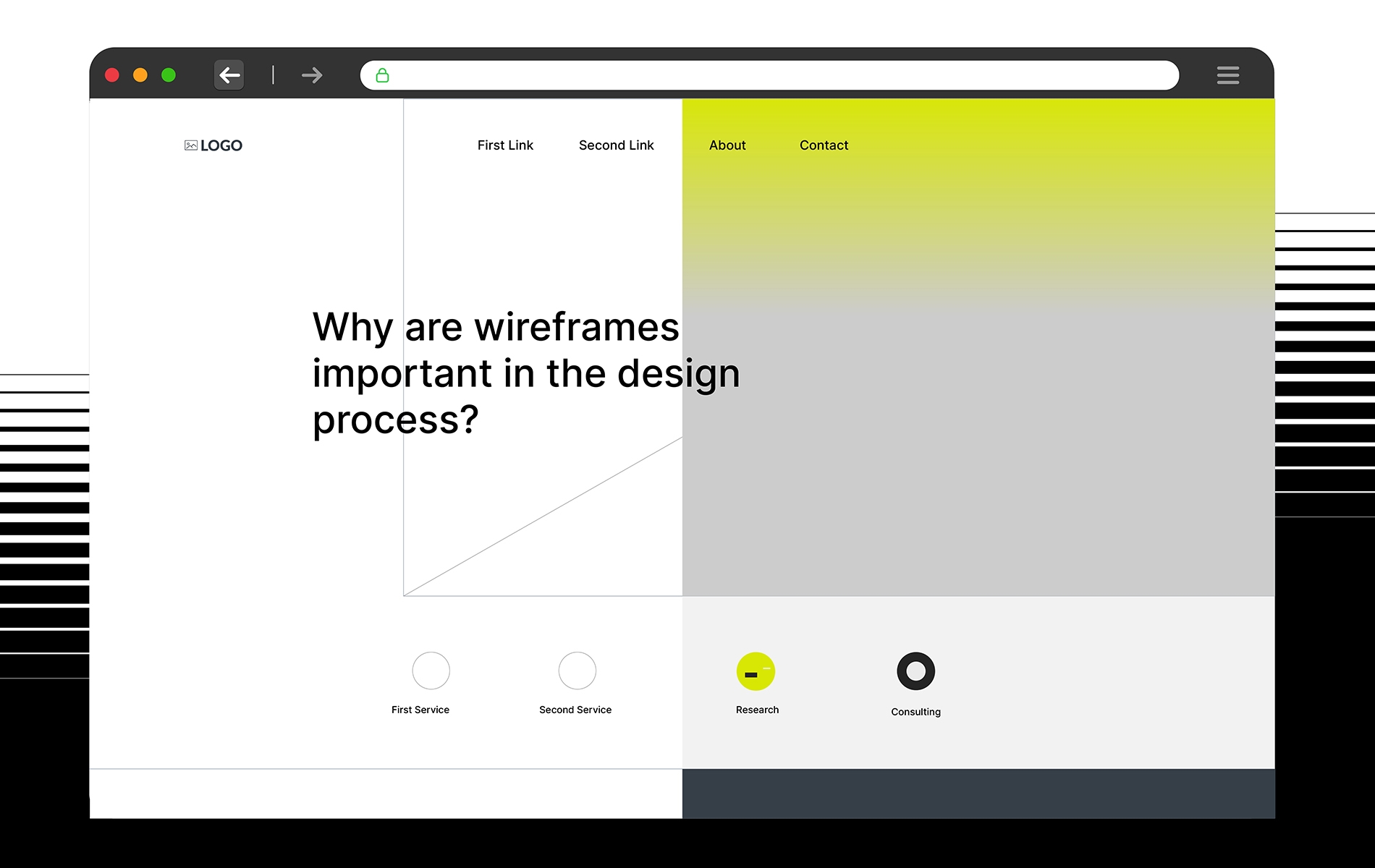
Wireframe is the creation of a basic outline for a screen or interface of a website or application, typically as a simple image or sketch with minimal detail. It focuses on the structure and basic arrangement of different elements such as content, images, buttons, and input fields, allowing viewers to focus on the main structure and layout of the content without distractions.
The importance of Wireframe includes:
Understanding the structure and details of the project: Wireframes help the team, including designers, developers, and users, understand the structure and design approach of the project.
Reducing confusion and design errors: By focusing on structure and element arrangement, wireframes help stakeholders understand and acknowledge the correct structure of the UI.
Serving as a tool to connect team members: Wireframes help everyone understand the project's objectives and workings, facilitating discussion and idea evaluation.
Wireframes come in two main types: Low-Fidelity and High-Fidelity, each with its differences, advantages, and disadvantages
Low-Fidelity Wireframes
Low-Fidelity Wireframes are less detailed and often created with paper and pen or simple wireframing tools.
Advantages:
• Quick and easy to create and understand.
• Suitable for creating prototypes and testing ideas, allowing for rapid idea finalization for further development.
• Helps the team collect feedback from users early on for quick adjustments.
Disadvantages:
• Lack of detail in design completion can lead to misunderstandings if team communication is not clear.
High-Fidelity Wireframes
High-Fidelity Wireframes are highly detailed.
Advantages:
• More detailed, including colors, typography, and text closer to the final outcome, helping to understand the structure and design work accurately.
• Provides a deeper understanding of design details and intentions for the team.
Disadvantages:
• Creating them takes more time and resources, as they need to be close to the final result, making changes more difficult.
Thus, wireframing is a crucial step that helps ensure a business's success and efficiency in further development.
Writer
UI/UX Designer
Pavinee Kerdthong