Client
Business Model Codex
Industry
Media & Broadcast
Expertise
Digital Strategy & Execution
Definition
Business Model Codex is a SUFFIX project that began as business model research for the team's own work. It grew into a podcast and a website that uses questions to help entrepreneurs, and people just starting a business, see business models from different angles, drawing on real companies operating outside Thailand as use cases.
Objective
A learning resource that helps entrepreneurs understand real-world business models and apply insights to their own businesses.
Outcome
In its day-to-day project work, the SUFFIX team researches business models to understand how companies earn revenue and where their advantage lies. The findings usually stayed inside the team, even though the same knowledge is useful to any entrepreneur who wants to see how real businesses abroad are built. SUFFIX summarised that research and retold it as a podcast, then built a website that uses questions as the way in, so the thinking reaches people who can put it to use.
Process
What did SUFFIX build for Business Model Codex?
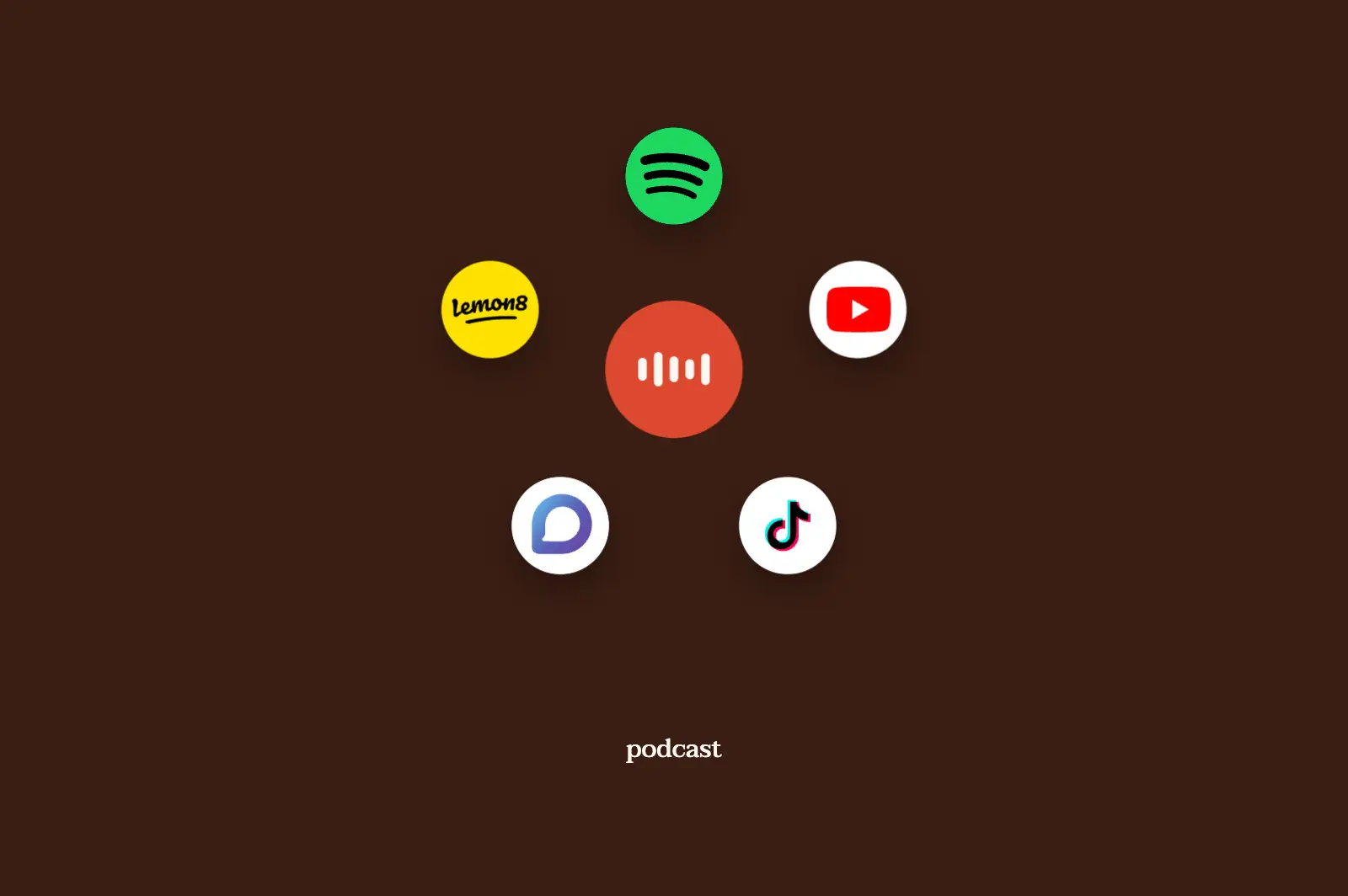
The project grew in stages. It started with the business model research the SUFFIX team uses in its own work. Each case was then distilled and told as a podcast episode, published on Spotify, YouTube, TikTok, Blockdit and Lemon8. After that, SUFFIX built business-model-codex.com, which organises the content around questions so readers can find what they need without working through every episode.
How does the Business Model Codex website help entrepreneurs?
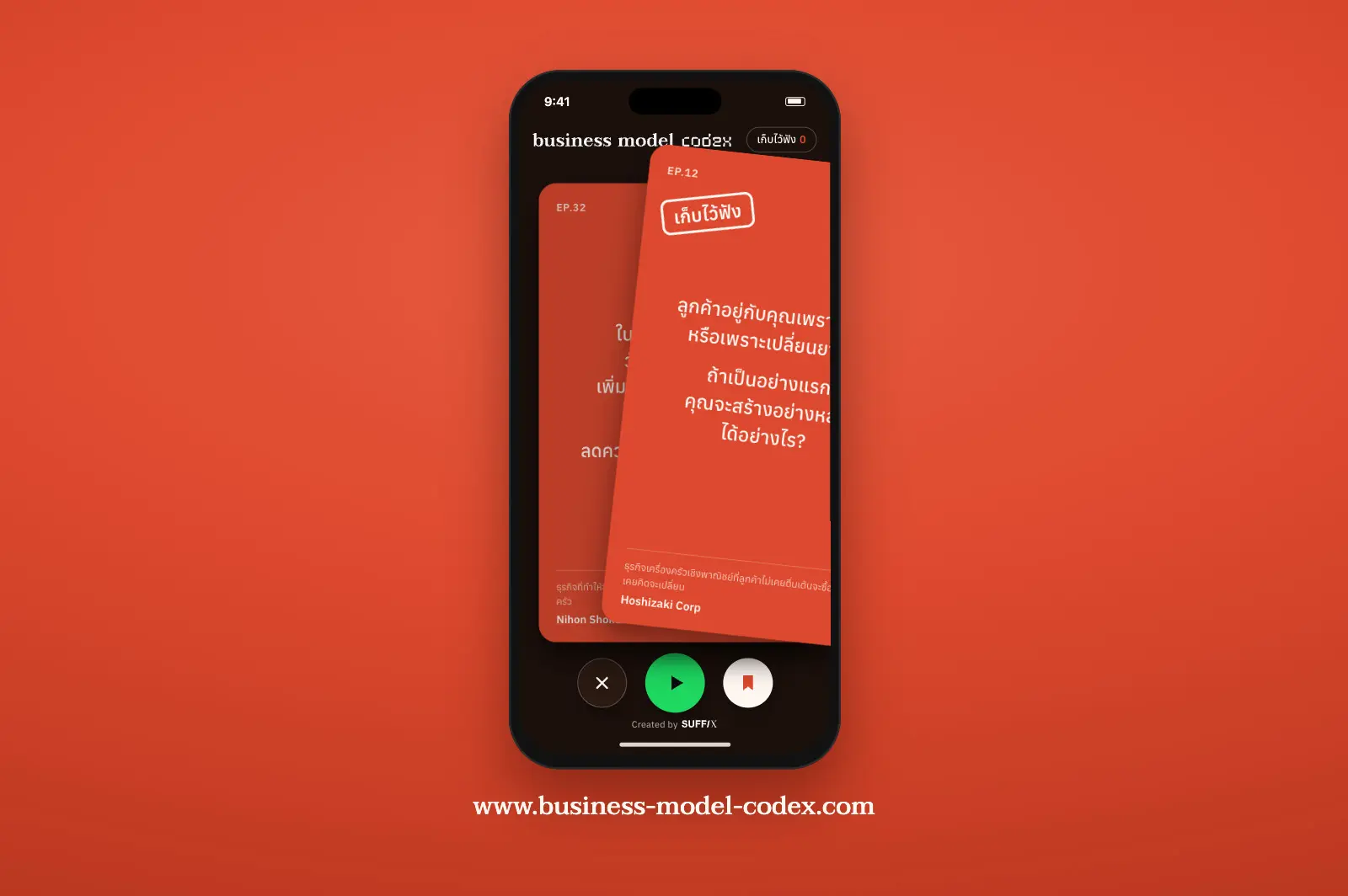
The website starts with questions. Each one leads the reader to look at a business model from a different angle, such as where the revenue comes from or where the advantage sits, and links to the podcast episode that uses a real business abroad as its use case. Established entrepreneurs use it to review the business they already run. People just starting out use it to see models that work in practice before they commit.
How is each podcast episode told?
Every episode follows the same four-part framework, so listeners can compare businesses across episodes.
1. Open (the assumption) starts with a fact, number or question that reveals the assumption behind the business.
2. How It Works (the mechanism) explains where revenue comes from and how money moves through the business.
3. The Clever Part (the structural advantage) shows the advantage from an angle that surprises even people who know the company well.
4. The One Insight (the takeaway) sets what most businesses do against what stronger businesses do differently, then closes with the question that appears on the website.
Team
Digital Marketer
Chatarin Inmuang
Director
Jate Saitthiti